The Silhouette: The Root of the Story
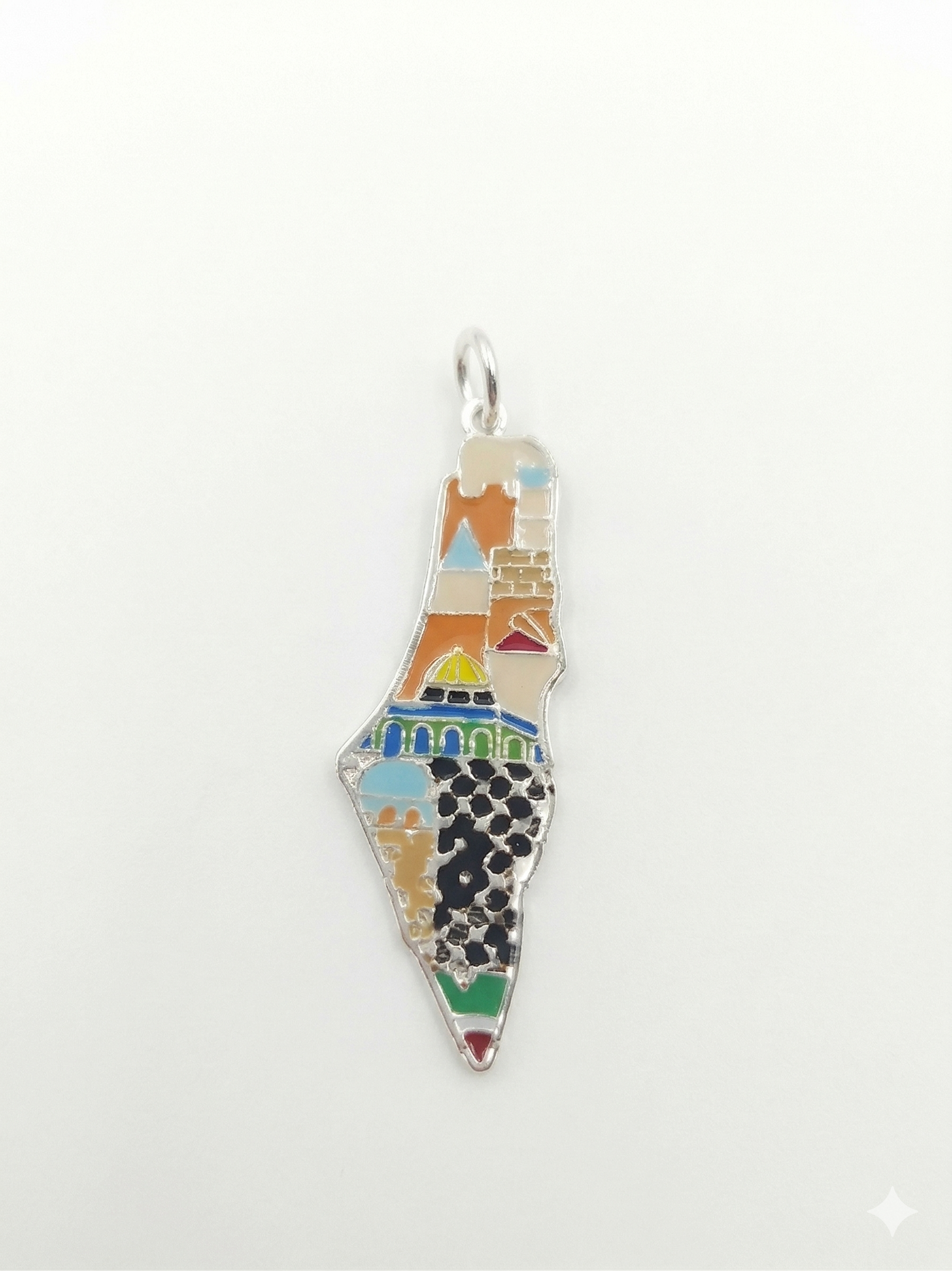
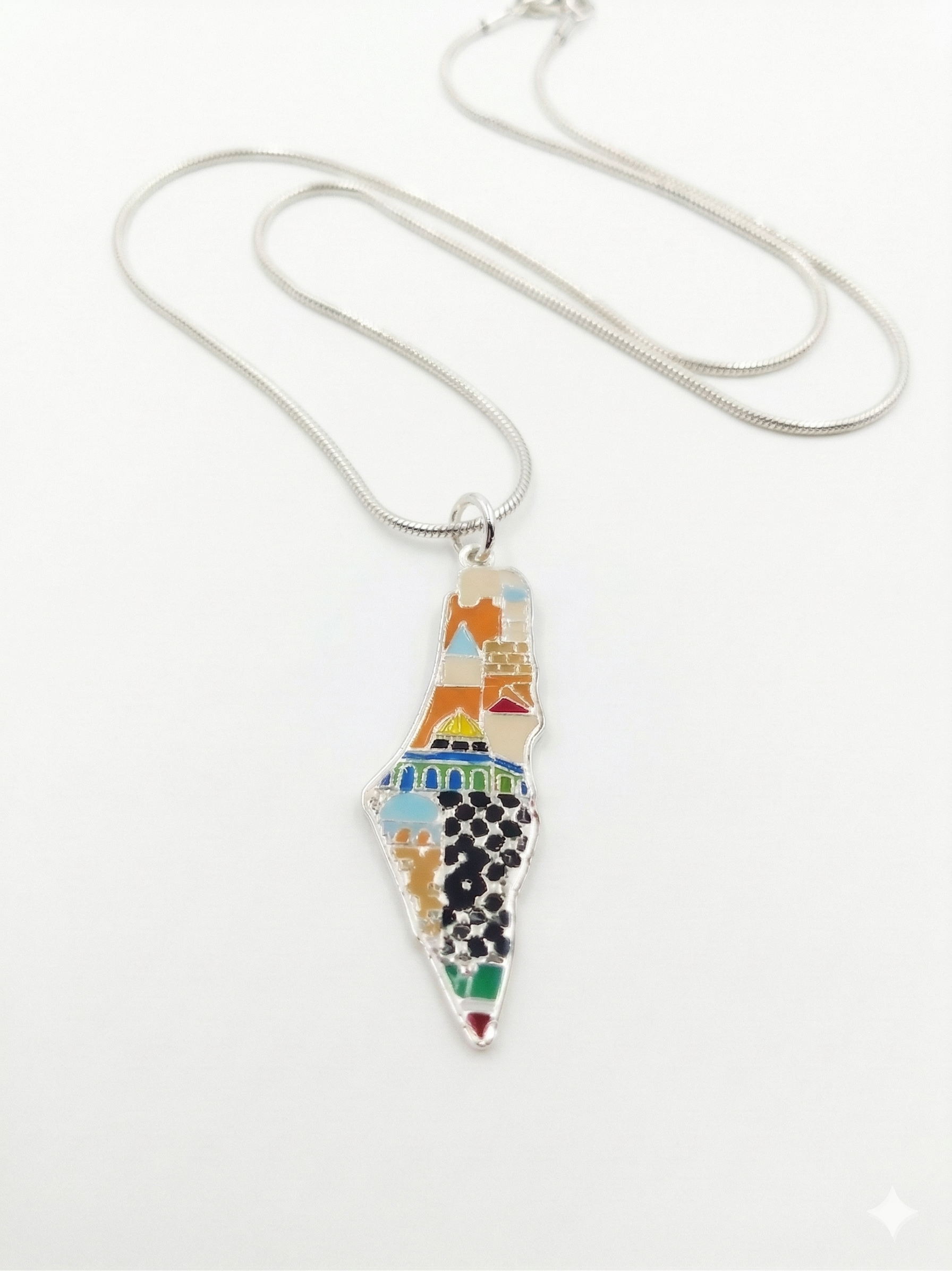
The story begins with the outline—the long, slender shape of the map that stretches from the Galilee to the Gulf of Aqaba. For a designer, this shape is a challenge and a triumph. It is a vertical anchor that carries the weight of history. By using this specific silhouette, the piece immediately identifies itself with a narrative of belonging. It isn’t just a map; it’s a vessel for the memories of cities like Jaffa, Haifa, Jerusalem, and Gaza.
The Dome of the Rock: The Spiritual Heart
At the center of the piece, rendered with a golden-yellow dome, sits the Dome of the Rock. This is the spiritual and architectural heartbeat of the story. In Palestinian art, the Dome represents Jerusalem (Al-Quds), the city that remains the focal point of the national identity.
In this design, the dome is situated exactly where the heart of the map would be. It serves as a reminder of the Umayyad architecture and the layers of history that have passed through the holy city. By placing it at the center, the designer suggests that no matter how the borders are redrawn, the spiritual and cultural center remains immovable.
The Keffiyeh: The Pattern of the Soil
Adjacent to the spiritual center is the black-and-white fishnet pattern of the Keffiyeh. Originally a practical garment for farmers to protect themselves from the sun and dust, the Keffiyeh was transformed in the 20th century into a global symbol of resistance and identity.
In the context of this map story:
-
The Fishnet Pattern: Represents the connection between the Palestinian sailor and the Mediterranean Sea.
-
The Bold Lines (Olive Leaves): Represent the strength, resilience, and perseverance of the olive trees that have stood for centuries. By incorporating these patterns directly into the metal and enamel, the story shifts from a political one to a personal one—the story of the farmer, the laborer, and the student.
The Stones of the Old City
The warm, earthy tones of orange, tan, and terracotta in the upper and lower sections of the map represent the Jerusalem Stone and the ancient masonry of Palestinian architecture. From the arched windows of Bethlehem to the old houses of Nablus, these colors tell a story of “building against the odds.”
The use of distinct colored blocks suggests the terraced hills of the West Bank, where the land is carved into steps to hold the soil for olive and almond trees. It is a story of a people who have literally shaped the earth to sustain them, creating a landscape that is as much a work of art as it is a source of life.
The Enamel: A Spectrum of Life
The use of colorful enamel—blues, greens, and reds—brings a sense of vitality to the silver.
-
The Green: Represents the fertile plains and the “Green Line,” but also the hope of a harvest.
-
The Blue: Evokes the coastal beauty of the Gaza Strip and the historic port of Acre.
-
The Red: Often symbolizes the blood shed for the land, but in Palestinian embroidery (Tatreez), it is also the color of celebration and the bride’s traditional dress.
These colors refuse to let the story be one of only sorrow. Instead, they insist on a story of vibrancy, weddings, music, and the “Joy of Life” that persists in every Palestinian home.
The Silver Frame: Protection and Preservation
The choice of silver as the medium is deeply significant. Silver is a “living” metal; it tarnishes and shines based on how it is cared for. In this story, the silver frame acts as the protector of the narrative. It holds all these disparate elements—the dome, the Keffiyeh, the stones, and the colors—together in one unified piece.
For the wearer, the silver is a constant weight against the skin, a reminder that the story of the map is carried with them wherever they go. It is a portable homeland for those in the diaspora and a badge of pride for those still on the land.
Conclusion: A Map Without End
The story of this pendant is ultimately about the refusal to be forgotten. By condensing a thousand years of architecture, textile history, and geography into a single piece of jewelry, the designer has created a conversation starter.
When someone asks about the pendant, the story of the map begins anew. It is a story that doesn’t end at the borders of the silver, but continues in the life of the person wearing it. It is a testament to the fact that while a map can be contested, a culture—vibrant, colorful, and resilient—can never be fully erased.