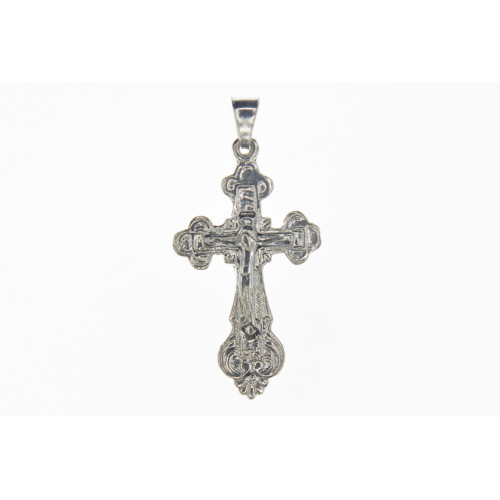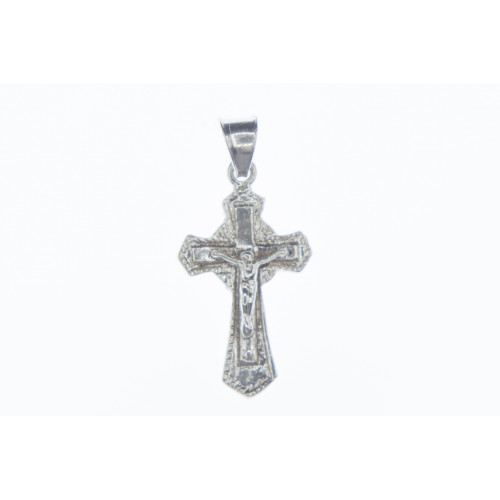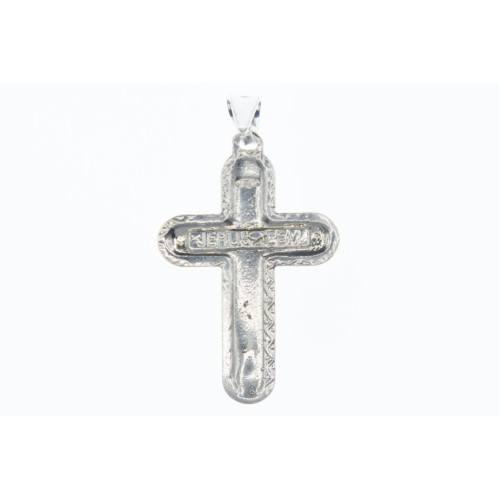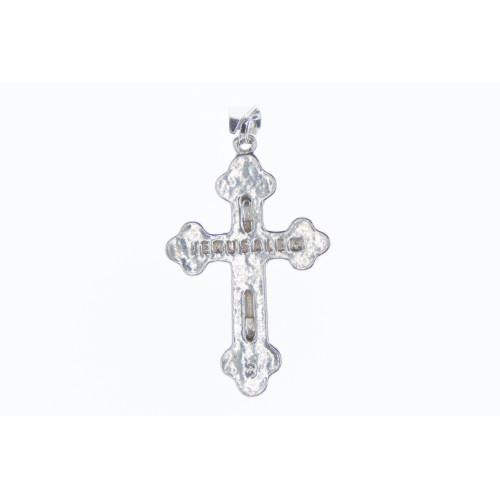
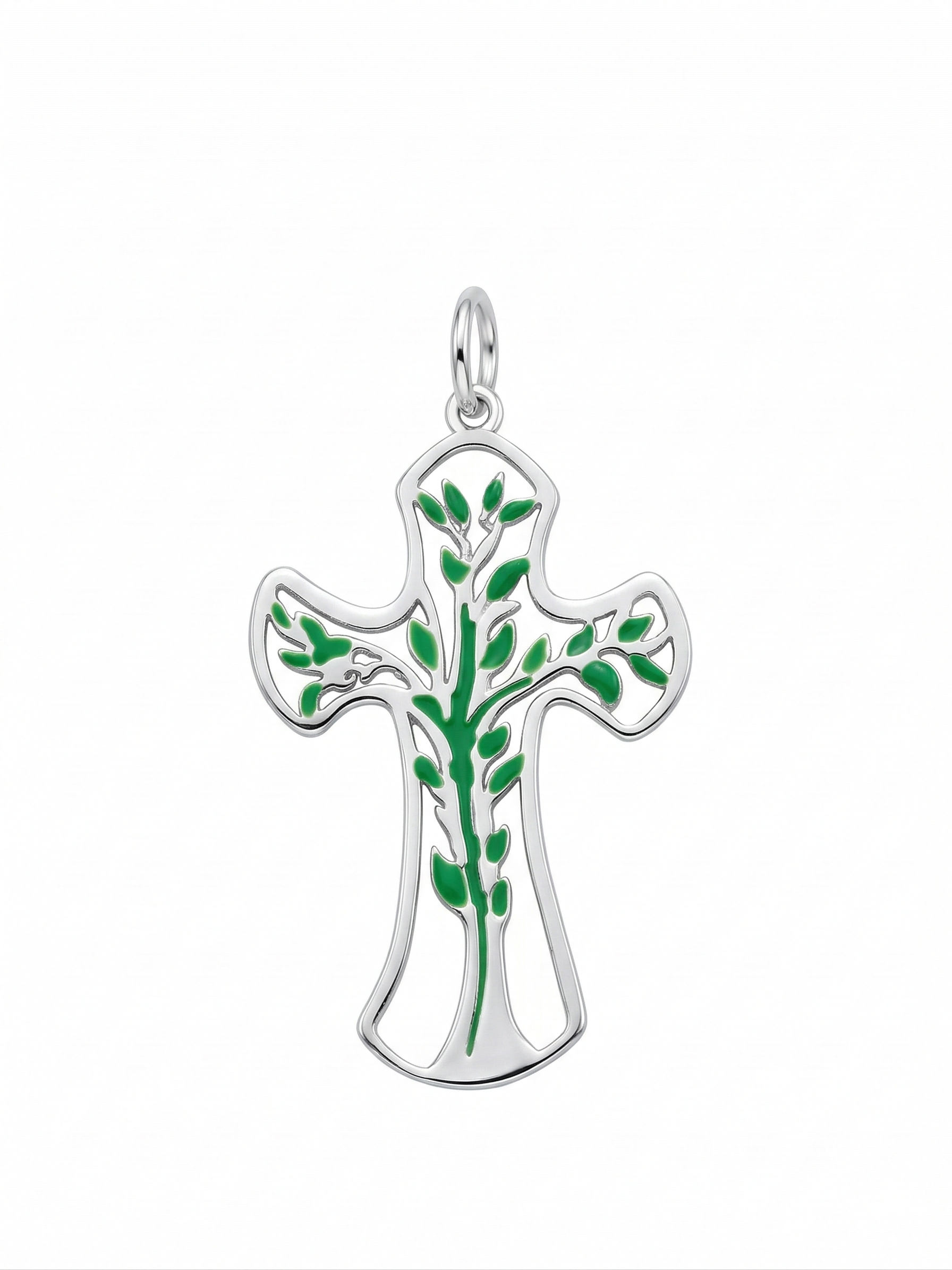
Cross With Enamel
The story of the cross with enamel is a tale of faith, craftsmanship, and historical significance that spans centuries. It begins in the early days of Christianity, when symbols of faith were crafted to inspire and remind believers of the sacrifice and salvation offered through Jesus Christ. The cross, as a symbol, became central to Christian worship and identity, and artisans sought to adorn it with precious materials and intricate designs to honor its sacred meaning. Enamel, a technique involving the fusing of powdered glass to metal, emerged as a favored medium for creating vibrant, durable decorations. Skilled artisans would meticulously apply layers of enamel to crosses made of gold, silver, or bronze, then fire them at high temperatures to achieve a glossy, colorful finish. These decorated crosses were not only religious artifacts but also works of art, often commissioned by churches, royalty, and wealthy patrons. They served as devotional objects, processional pieces, and treasures displayed in sacred spaces, embodying both spiritual devotion and artistic excellence. Over time, the craftsmanship evolved, with regions such as Byzantium, the Middle East, and parts of Europe developing distinctive styles that reflected local cultural influences. Byzantine enameled crosses, for instance, are renowned for their rich iconography and use of gold and vibrant colors, symbolizing divine light and heavenly glory. The enamel process allowed for the creation of detailed images, saints, and biblical scenes, transforming the cross into a storytelling canvas. During the medieval period, the production of enameled crosses flourished, and techniques such as cloisonné and champlevé became prominent. Cloisonné involved creating compartments with thin metal wires to hold the enamel, while champlevé involved carving into the metal surface to create recessed areas filled with enamel. These techniques produced stunning visual effects and intricate patterns. The cross with enamel also played a role in the cultural exchanges along trade routes, where artisans shared techniques and motifs, enriching the artistic vocabulary. The Renaissance period saw a renewed interest in classical themes and human figures, influencing enamel work and leading to more elaborate and personalized crosses. In addition to their religious function, enameled crosses became symbols of status and power, often gifted or worn by nobles and clergy. The craftsmanship spread beyond Europe and the Middle East, influencing jewelry, reliquaries, and ecclesiastical objects worldwide. The advent of modern methods and industrialization in the 19th and 20th centuries posed challenges for traditional enamel craftsmanship, but it also led to innovations and preservation efforts. Today, antique enameled crosses are treasured collector’s items, and contemporary artisans continue to explore and refine the art form, blending tradition with new techniques. The story of the cross with enamel is thus a reflection of the enduring human desire to combine faith, art, and craftsmanship into objects that transcend time, inspiring devotion and admiration across generations.