Fish With Jerusalem Cross
1. The Ancient Origins: Fertility and Protection
In the ancient world, the fish was primarily a symbol of abundance and life. Because fish produce thousands of eggs, they were naturally associated with fertility and the regenerative powers of water.
Mesopotamia and Egypt
In ancient Mesopotamia, the fish was linked to Enki, the god of water, knowledge, and creation. Wearing a fish-shaped charm was a way to invoke his wisdom. In Ancient Egypt, the “Nekhau” (fish amulet) was incredibly common. Specifically, the Lates niloticus (Nile perch) and the Tilapia were worn as pendants.
The Tilapia was particularly fascinating to Egyptians because it practices “mouthbrooding”—carrying its young in its mouth. To the ancients, it looked like the fish was giving birth to fully formed young from its mouth, symbolizing rebirth and the afterlife. Egyptian children often wore small gold or silver fish pendants in their hair or around their necks to protect them from drowning.
2. The Ichthys: A Secret Identity
Perhaps the most famous chapter in the story of the fish pendant began in the first centuries of the Common Era. For early Christians living under the Roman Empire, practicing their faith was a dangerous act that could lead to persecution.
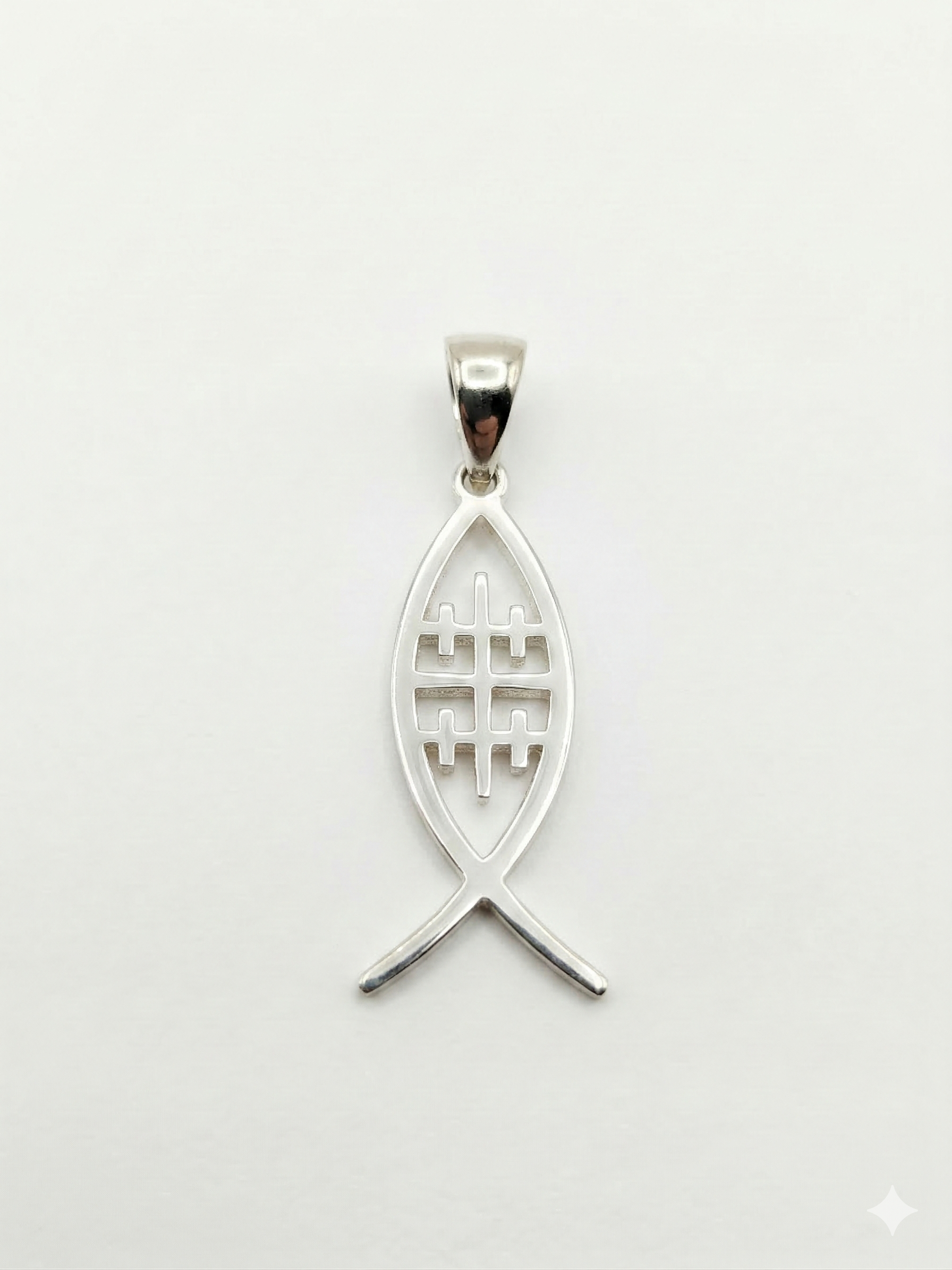
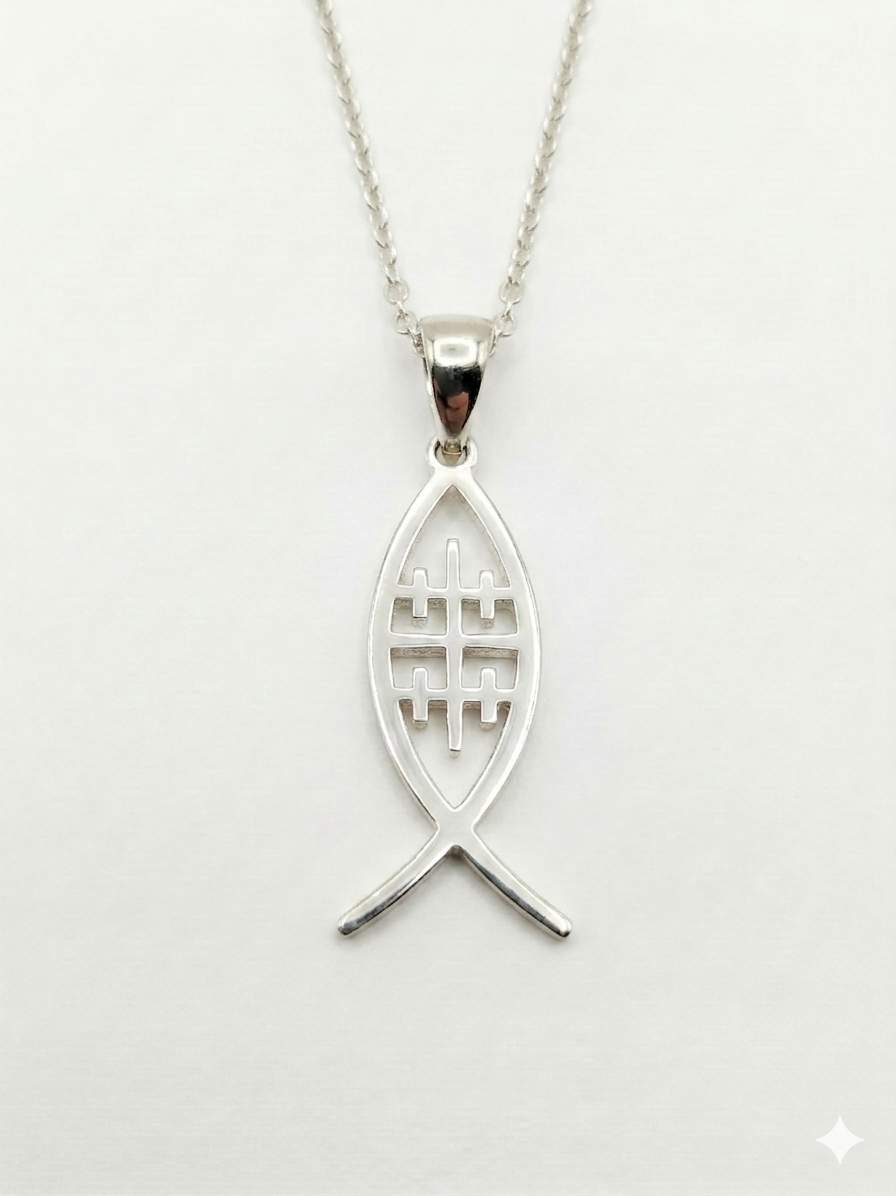
They needed a secret sign to identify one another without alerting Roman authorities. They chose the fish, or Ichthys. The Greek word for fish, $ΙΧΘΥΣ$, served as an acrostic for:
-
Iēsous (Jesus)
-
CHristos (Christ)
-
THeou (of God)
-
Yios (Son)
-
Sōtēr (Savior)
When two strangers met, one would draw an arc in the sand. If the other person completed the arc to form the outline of a fish, they knew they were in safe company. Transitioning this symbol into jewelry allowed believers to carry their faith discreetly. A small silver or bronze fish pendant wasn’t just an ornament; it was a clandestine badge of belonging.
3. Eastern Traditions: Luck and Duality
While the West viewed the fish through a lens of protection and faith, the East saw it as a symbol of prosperity and harmony.
China and the Double Fish
In Chinese culture, the word for fish (yu) sounds exactly like the word for “surplus” or “abundance.” Consequently, fish pendants became popular gifts for New Year celebrations, symbolizing the wish that the wearer would always have more than they needed.
The Double Fish is one of the Eight Auspicious Symbols of Buddhism. Pendants featuring two fish joined together represent:
-
The union of two people (often given as wedding jewelry).
-
Freedom from restraint (as fish move freely in water).
-
The harmony of Yin and Yang.
The Koi of Japan
In Japan, the Koi fish—specifically the version that swims upstream—became a symbol of perseverance and strength. A Koi fish pendant tells the story of a soul that overcomes great obstacles to achieve a goal, based on the legend that a Koi that could leap over the “Dragon Gate” on the Yellow River would be transformed into a celestial dragon.
4. The Silver Craft: Artistry in Motion
As jewelry-making techniques evolved, the fish pendant became a showcase for mechanical ingenuity.
One of the most beloved iterations is the articulated silver fish. Originating largely from European and Middle Eastern silversmiths in the 19th and early 20th centuries, these pendants are made of tiny, overlapping silver scales joined by pins.
The result is a piece of jewelry that “swims” when held in the hand. These were often used as “scent bottles” or “vinaigrettes,” where the head of the fish would flip open to reveal a small sponge soaked in perfume or smelling salts. Today, these vintage articulated fish are highly prized by designers for their tactile, playful nature and the way they catch the light with every movement.
5. Modern Symbolism: Freedom and Fluidity
In the 21st century, the fish pendant has shed much of its rigid religious or superstitious weight, becoming a symbol of personal freedom and environmental consciousness.
-
The Zodiac: For those born under the sign of Pisces, the fish pendant represents empathy, creativity, and a connection to the subconscious mind.
-
The Voyager: For travelers and divers, it represents a love for the ocean and the mysteries of the unexplored world.
-
The Minimalist: In modern design, the fish is often rendered as a single, sleek line of silver or gold—a “primitive” shape that feels both ancient and futuristic.
Conclusion: Why We Still Wear It
The story of the fish pendant is a story of survival. It is a symbol that has lived in the pockets of pharaohs, the hidden catacombs of Rome, and the jewelry boxes of modern artisans.
Whether it is a heavy silver piece crafted with EZCAD precision or a delicate gold charm, the fish remains a reminder of our connection to the water—the source of all life. To wear a fish is to carry a piece of the deep, a sliver of history, and a silent wish for abundance and safe passage through the currents of life.