
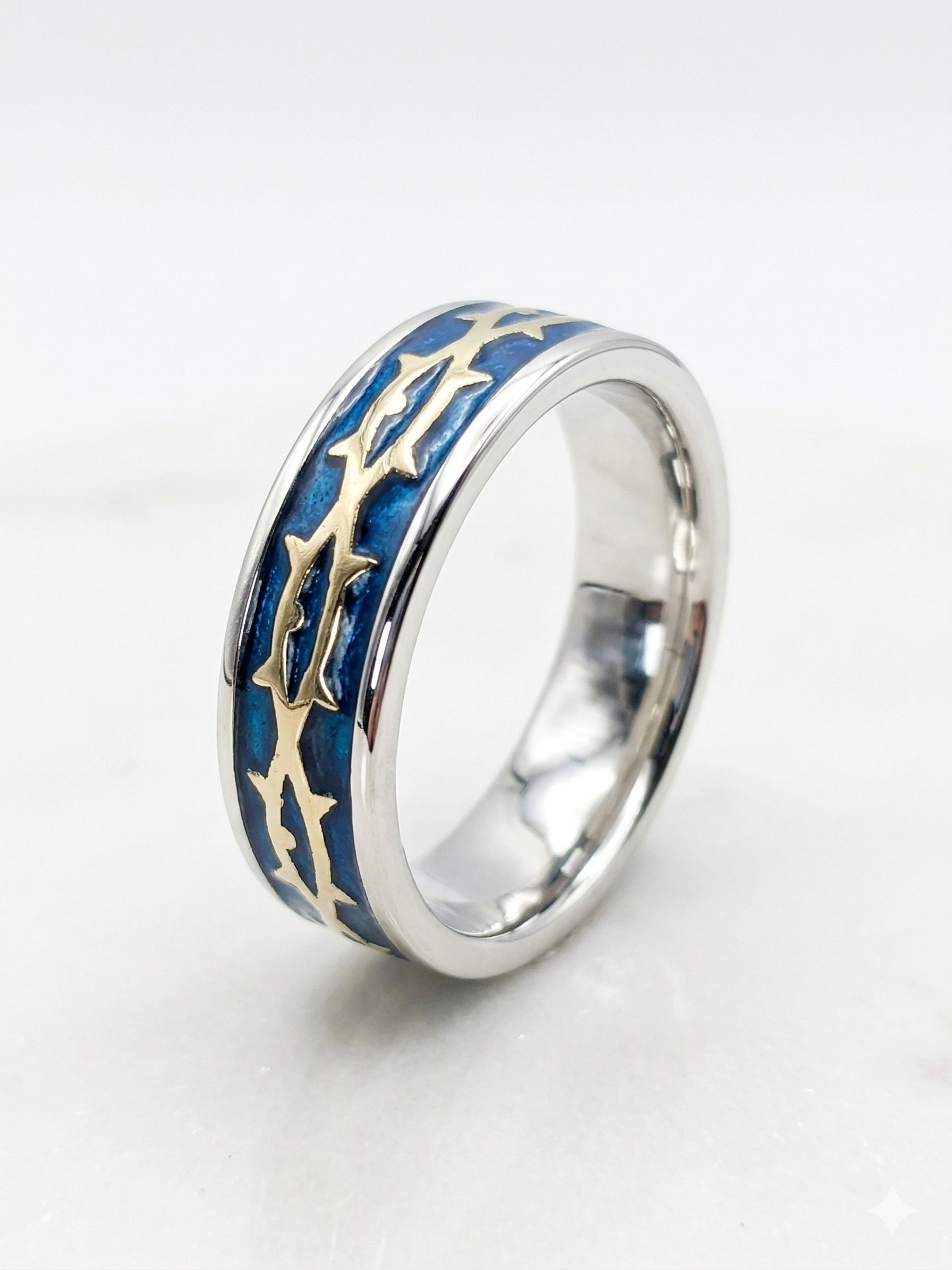
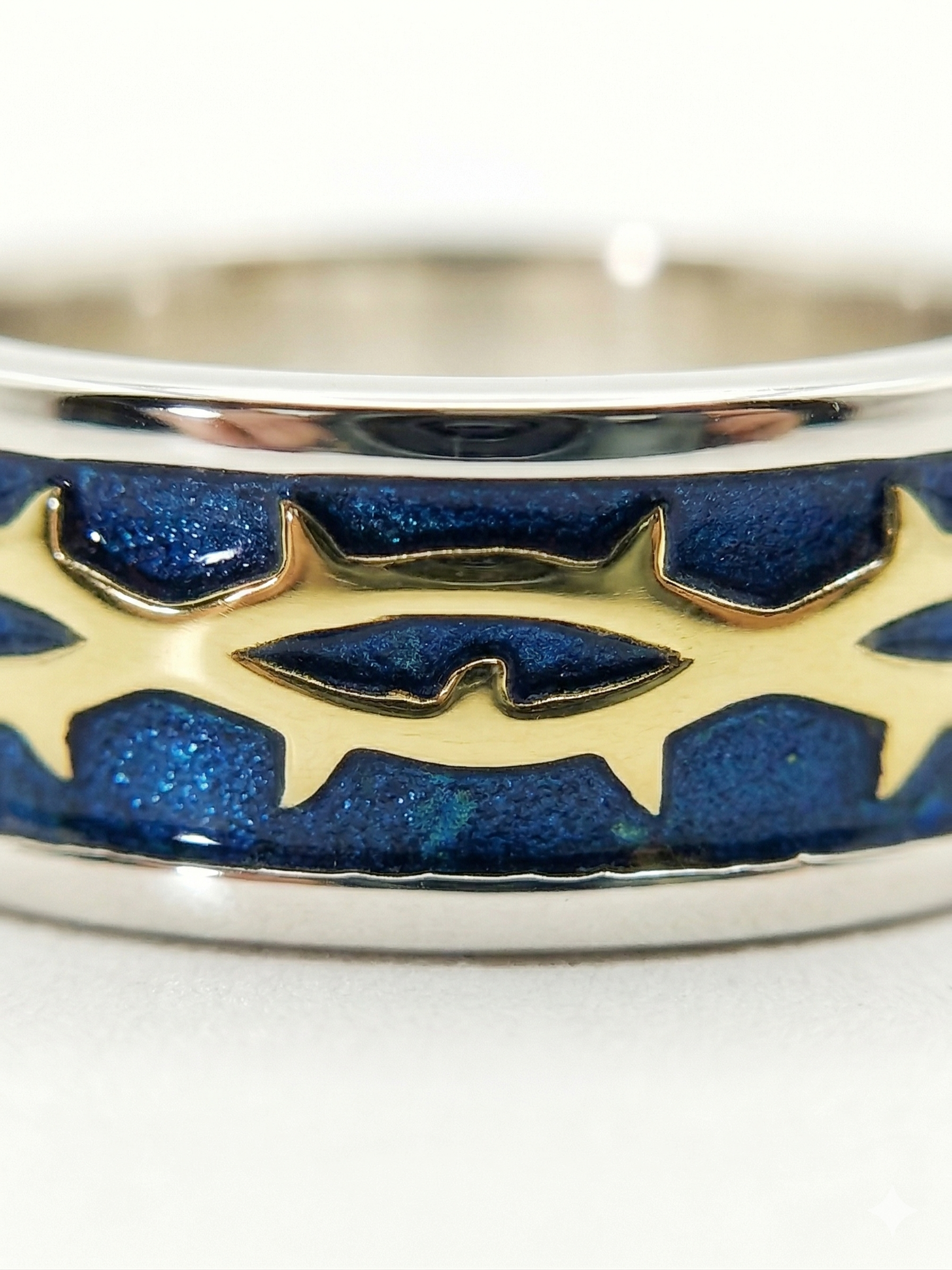
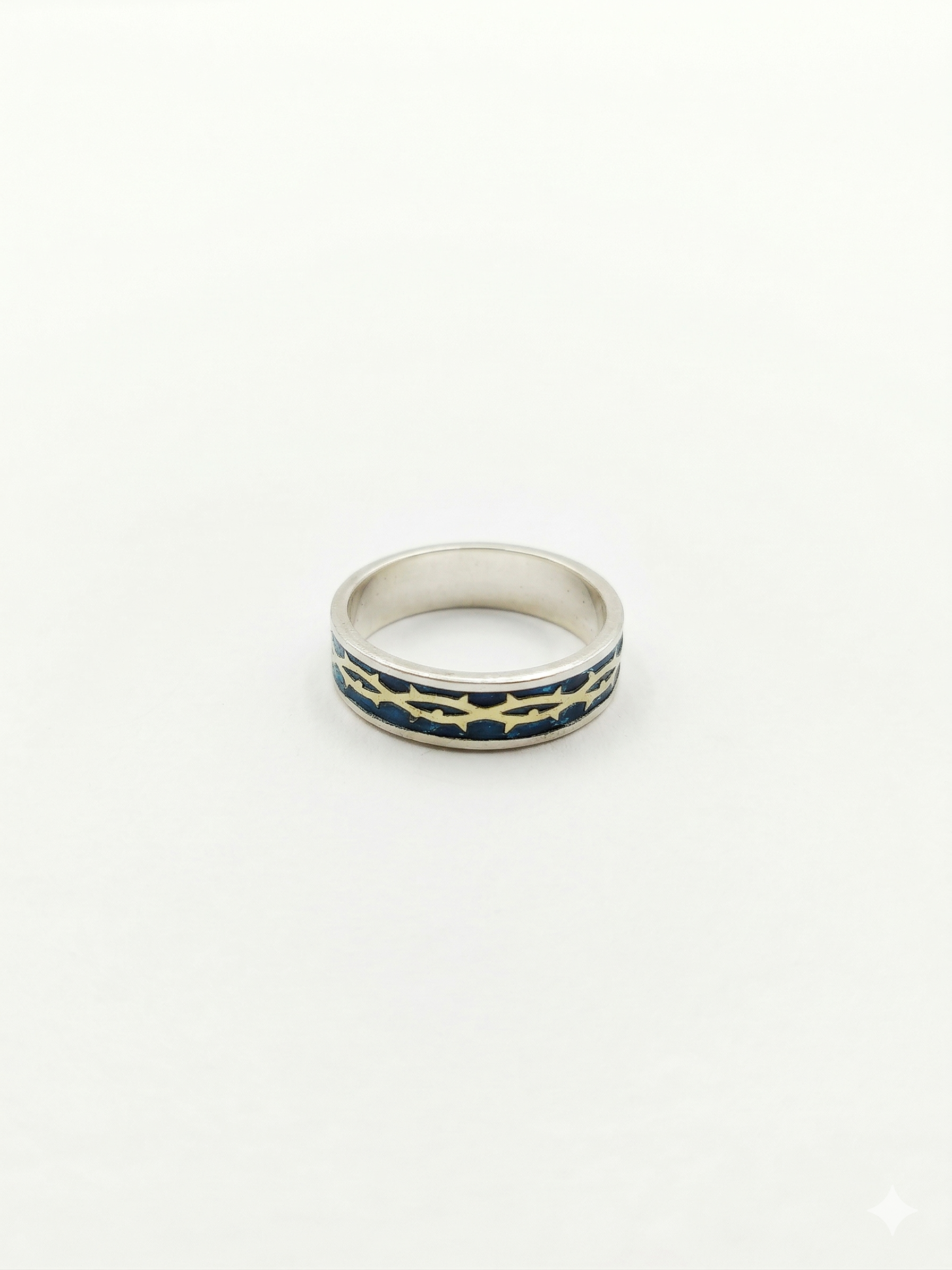
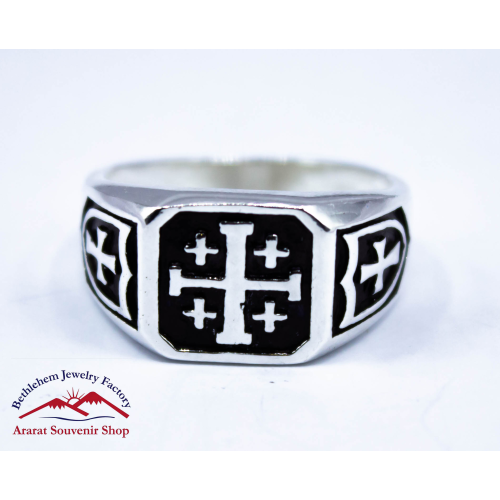
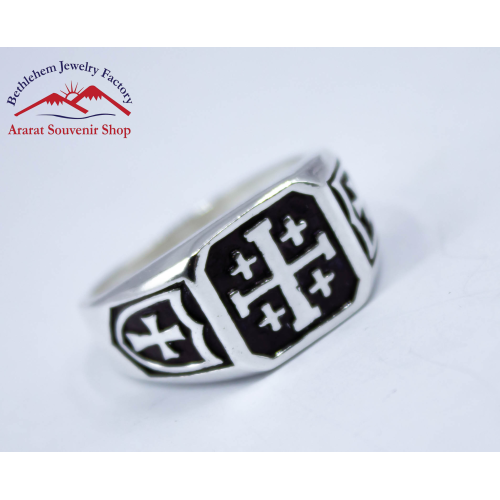
“crown of thrones Ring with enamel”
“crown of thrones Ring with enamel”
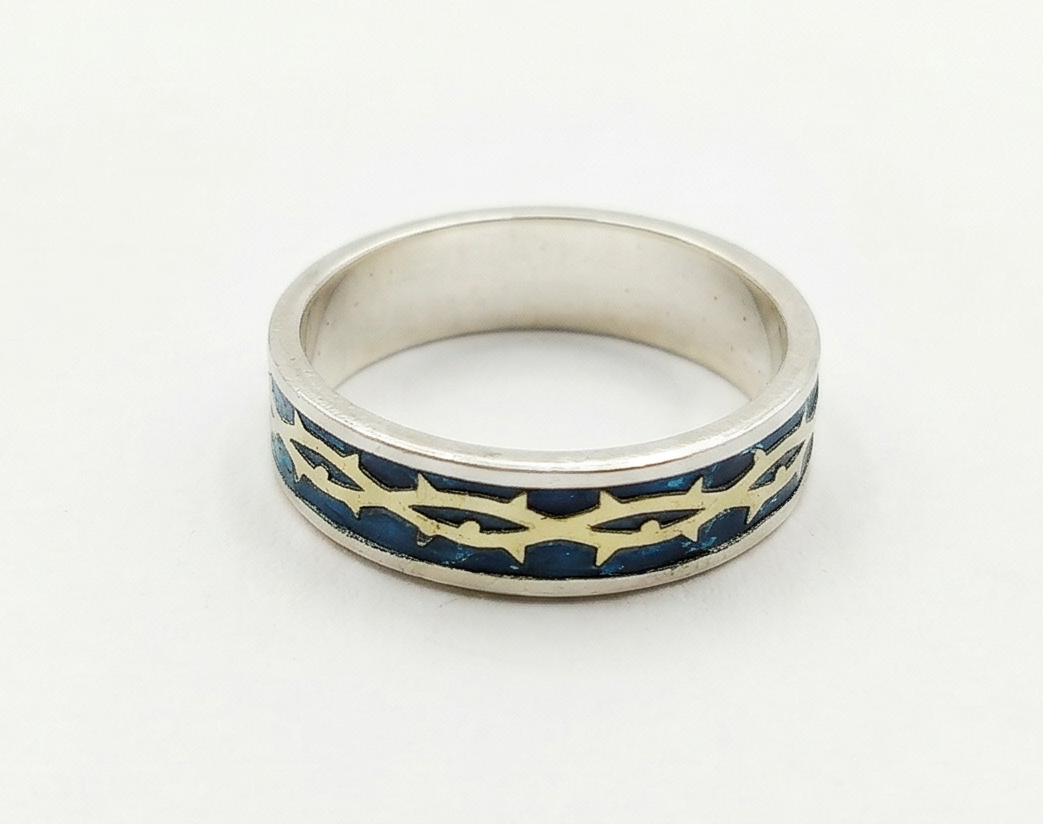
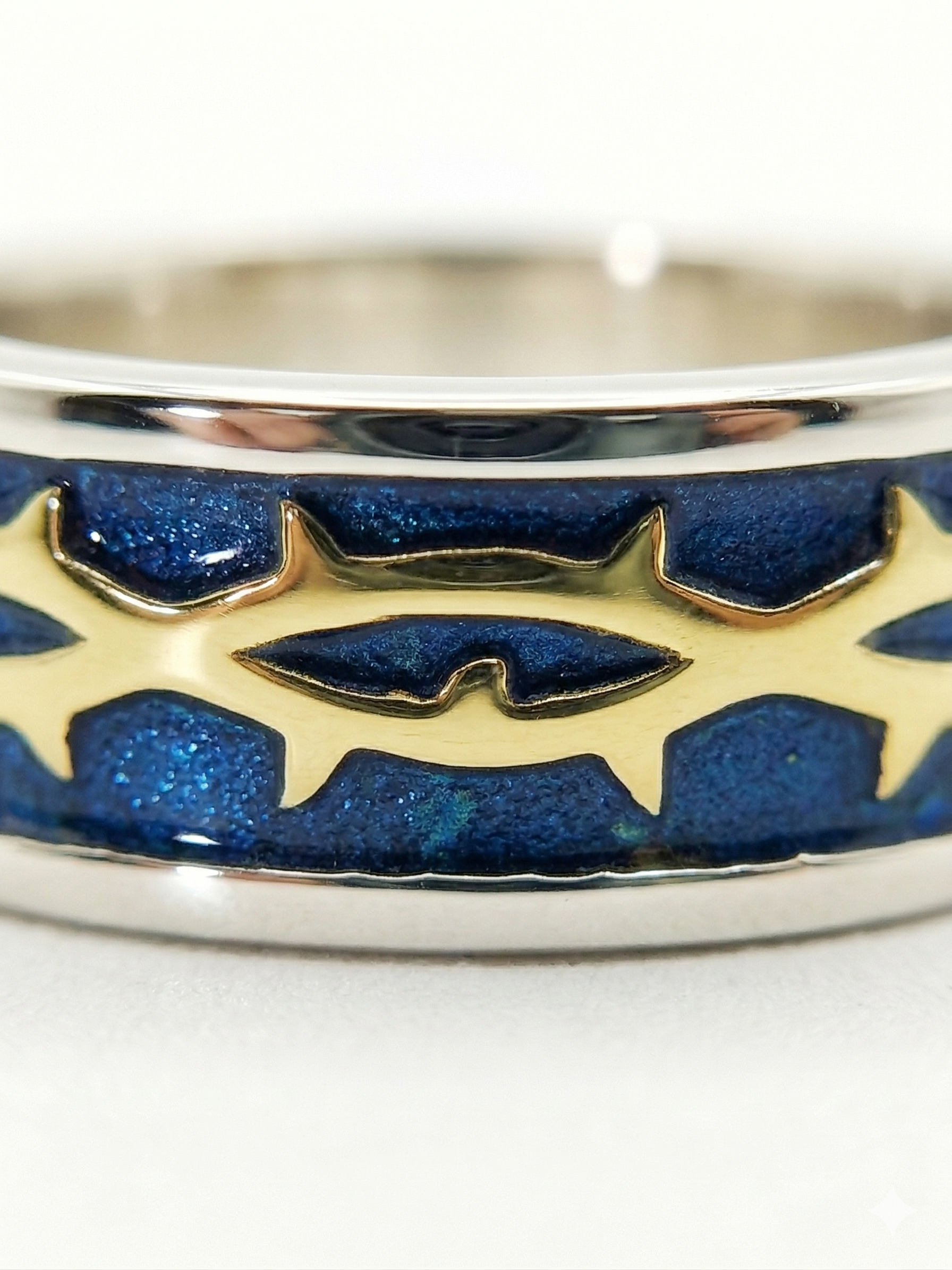
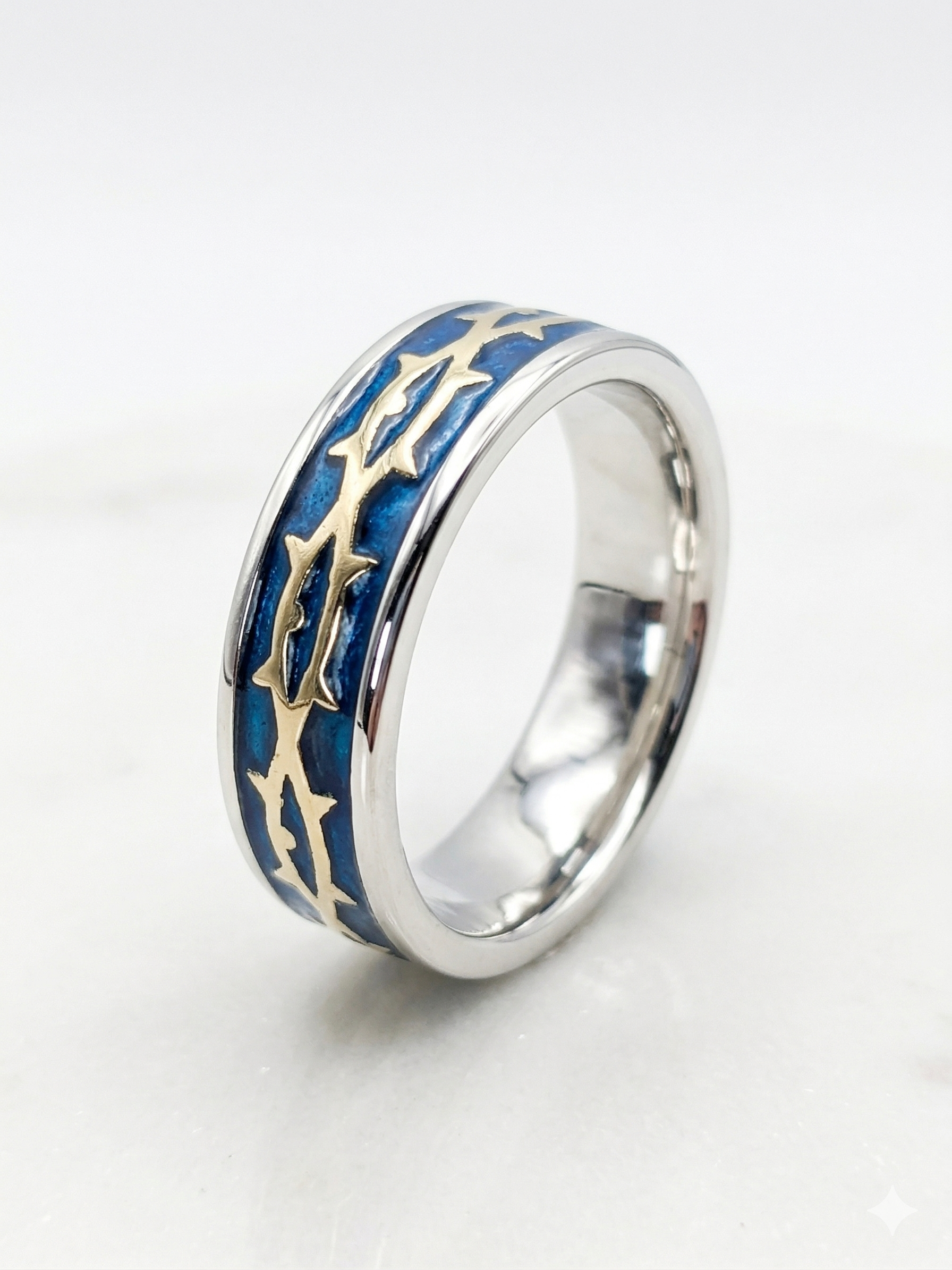
“crown of thrones Ring with enamel”
The Origin: A Mockery of Kingship The story begins in Jerusalem roughly 33 AD. Jesus stood before Pontius Pilate on political charges because he claimed to be the “King of the Jews.” Consequently, this claim directly threatened Caesar’s authority.
To the Roman soldiers, this was a prime chance for cruel amusement. Specifically, they wanted to mock his claim. Therefore, they decided a fake king needed royal regalia. Today, this motif lives on in fine jewelry, such as the modern Crown of Thorns ring with enamel.
“crown of thrones Ring with enamel” The Construction of the Crown Local plants provided the soldiers with materials. Although historians still debate the exact plant species, many point to Ziziphus spina-christi or Euphorbia milii. Indeed, both feature long, sharp spines.
-
The Robe: First, soldiers draped a scarlet or purple cloak over him to mock imperial royalty.
-
The Scepter: Next, they placed a reed in his hand to represent a royal staff.
-
The Crown: Finally, flexible, thorny branches were twisted into a circlet and pressed onto his head.
The soldiers knelt and shouted, “Hail, King of the Jews!” Meanwhile, they spat on him. Then, they struck his head with the reed to drive thorns into his scalp.
“crown of thrones Ring with enamel” The Theological Weight In Christian tradition, the crown symbolizes the “Great Exchange.” For instance, in Genesis, thorns represent a curse on the earth. By extension, by wearing them, Jesus takes that curse upon himself.
It also represents the inversion of power. Worldly kings wear gold. However, the “Heavenly King” wears pain to signify service. Because this symbolism lives on today, a handcrafted faith ring serves as a meaningful reminder of that sacrifice.
“crown of thrones Ring with enamel” The Journey Through History Initially, the relic vanished from historical records for centuries. However, in the 4th century, Empress Helena traveled to the Holy Land. Eventually, she allegedly rediscovered the “True Relics” of the Passion.
Artisans across eras drew inspiration from these objects. As a result, they created detailed devotional bands to honor the original circlet.
The Byzantine Era For centuries, the Boukoleon Palace in Constantinople housed the relic. In fact, it was the jewel of the Byzantine collection.
However, the Fourth Crusade left the Empire in deep financial ruin. Thus, leaders were forced to seek emergency funds.
King Louis IX and Paris In 1238, Latin Emperor Baldwin II pawned the relic to Venetian merchants. Fortunately, King Louis IX of France was a devout ruler. He redeemed it for 135,000 livres.
For example, this sum far exceeded the 40,000 livres spent to build the Sainte-Chapelle. Louis greeted the relic barefoot in a simple tunic. Then, he carried it into Paris himself.
“crown of thrones Ring with enamel” The Sainte-Chapelle Reliquary To properly house the sacred artifact, Louis IX constructed the Sainte-Chapelle as a royal chapel. The Crown became a central symbol of French monarchical piety and political prestige across Europe for generations.
The Modern Era: Notre-Dame and Beyond The Crown remained in the Sainte-Chapelle for centuries. Later, rescuers saved it during the French Revolution. Consequently, Napoleon Bonaparte moved it to Notre-Dame in 1806.
Because popes and monarchs received individual thorns over time, only a circular bundle of rushes remains in the reliquary. Nevertheless, fine metalwork pieces often emulate this dark-and-gold contrast through custom enameling.
The 2019 Rescue On April 15, 2019, Notre-Dame caught fire. As the spire collapsed, firefighters formed a human chain. In response, they worked quickly to save the treasures.
The team prioritized the Crown of Thorns above all else. As a result, firefighters safely rescued the relic. Finally, they transferred it to the Louvre Museum for safekeeping.
“crown of thrones Ring with enamel” Symbolic Legacy in Art and Culture The Crown of Thorns fundamentally shaped Western art. In particular, Middle Age creators focused on “Affective Piety” to highlight physical sacrifice:
-
Matthias Grünewald: For instance, his Isenheim Altarpiece depicts the thorns with jagged realism.
-
Caravaggio: Similarly, his Crowning with Thorns uses dramatic lighting to emphasize tension.
-
Literature: Likewise, writers like T.S. Eliot use the thorns as a key metaphor for suffering.
-
Modern Wearable Art: Today, designers recreate this legacy in pieces like a Crown of Thorns ring with enamel. Indeed, these designs blend sacred history with durable style.



Reviews
There are no reviews yet.