

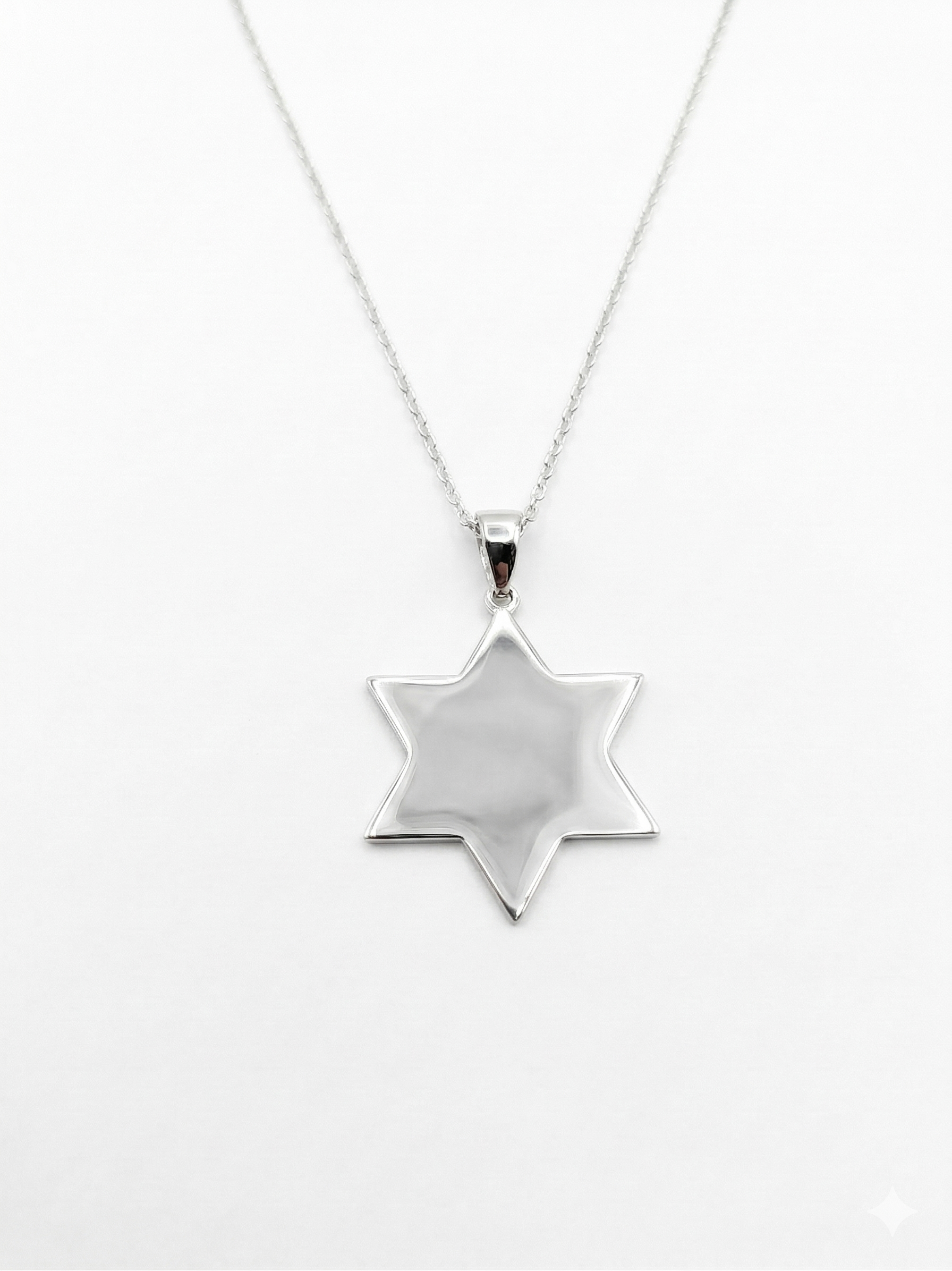


https://bethlehemjdc.com/product/david-star-3/
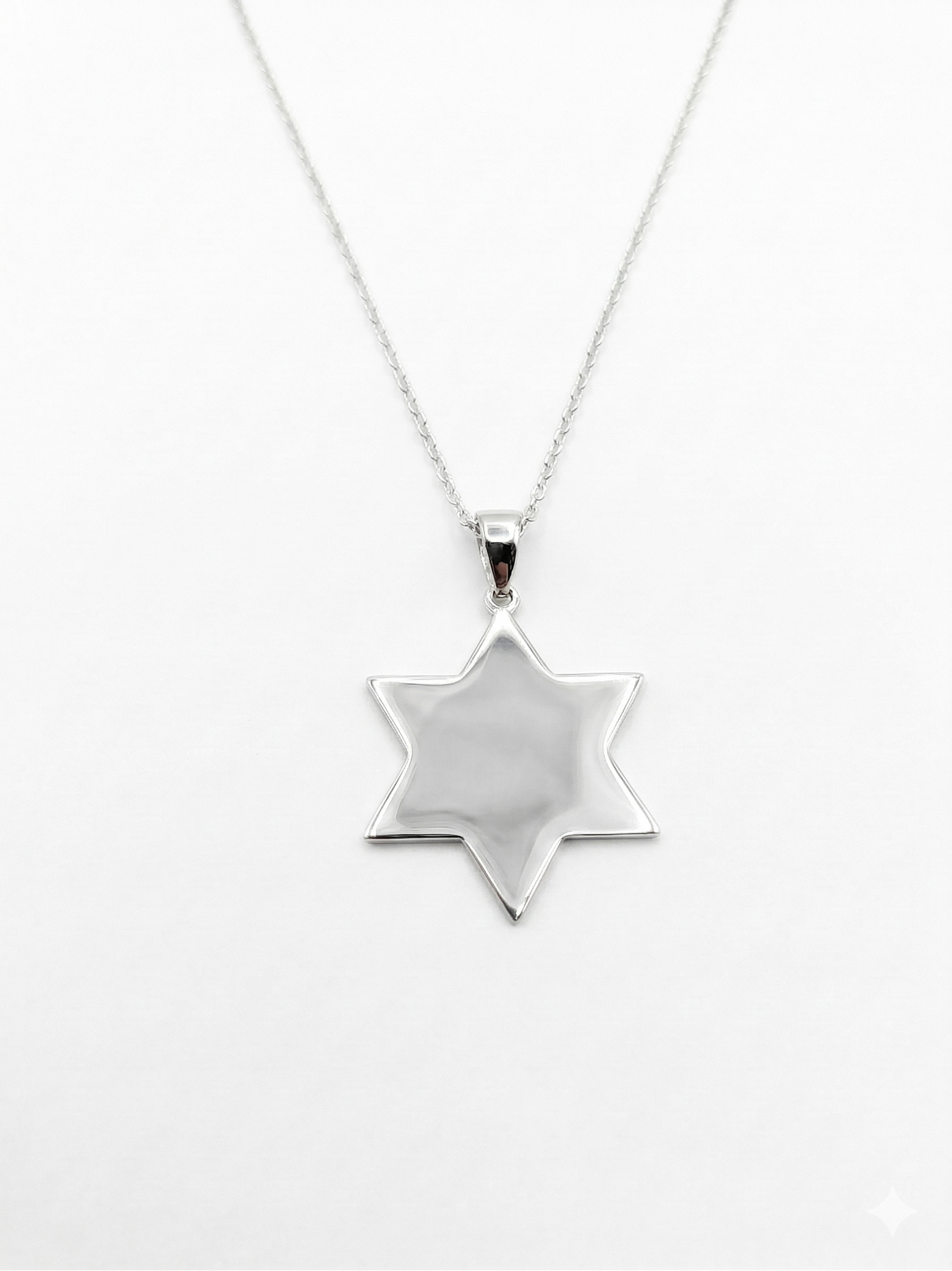
Silver Jewish David Star
Ancient Origins and Common Geometry
The six-pointed star, or hexagram, forms a mathematically perfect shape through two interlocking equilateral triangles. Specifically, because of this natural symmetry, ancient cultures used it long before it represented Jewish identity.
In antiquity, for example, Hindus, Buddhists, and early Islamic artists frequently used the hexagram decoratively. Similarly, in the Middle East, people called it the “Seal of Solomon.” Legend claimed King Solomon wore a magical signet ring with this symbol, which allowed him to command demons and speak to animals.
However, the primary Jewish symbol of this era was the Menorah rather than the star. Although the star appeared occasionally—such as on a 3rd-century synagogue frieze in Capernaum—builders placed it alongside floral patterns and other motifs without granting it national weight.
The Middle Ages: Protection and Mysticism
The hexagram gradually shifted into the “Shield of David” during the medieval period through Kabbalah, or Jewish mysticism.
By the 11th century, the term Magen David appeared in Jewish manuscripts. At first, it served simply as a verbal prayer praising God as David’s shield. Over time, mystics merged the name with the geometric shape. As a result, they began drawing the hexagram on protective amulets and mystical diagrams to show the connection between heaven and earth.
Furthermore, scholars interpreted the six points and the center as God’s seven attributes or the seven days of the week. Because the points reached outward in every direction, the star ultimately symbolized God’s omnipresence over the Jewish people.
From Prague to a National Symbol
The star first became an official communal emblem in 14th-century Prague. In 1354, for instance, Emperor Charles IV allowed the Jewish community to fly their own flag. Consequently, they chose a red banner featuring a gold star.
This marked the first recorded official use of the star for a Jewish community. From that point on, the symbol spread across Eastern Europe. By the 18th century, communities carved it on synagogues and headstones, thereby replacing the Menorah as the most common mark of Jewish presence.
Later, during 19th-century European Emancipation, Jews sought a distinct emblem to stand alongside the Christian Cross. In this context, the Star of David fit perfectly because it was ancient, recognizable, and abstract.
The 20th Century: Darkness and Rebirth
Unfortunately, the 20th century brought the most harrowing chapter in the star’s history. During the Holocaust, the Nazi regime turned this symbol of protection into a badge of shame.
Nazis forced Jews to wear a yellow star in order to isolate and persecute them. Consequently, what was once a source of pride became an instrument of targeting. Nevertheless, many individuals wore the star as a quiet act of defiance inside the ghettos.
Finally, when leaders established the State of Israel in 1948, they placed the Star of David on the national flag. Centered between two blue stripes, the emblem signaled a complete rebirth. Thus, the Jewish people reclaimed the symbol as a banner of sovereignty.
Modern Significance
Today, the Star of David carries deep meaning across several distinct areas:
-
Religious: First, it represents the enduring covenant between God and the Jewish people.
-
National: Second, it stands as the central symbol on the Israeli flag.
-
Humanitarian: Finally, Magen David Adom uses it for Israel’s emergency medical and blood services.
In short, from medieval amulets to the modern flag in Tel Aviv, the Star of David tells a story of endurance. It evolved from a simple shape into a lasting symbol of identity and survival.