
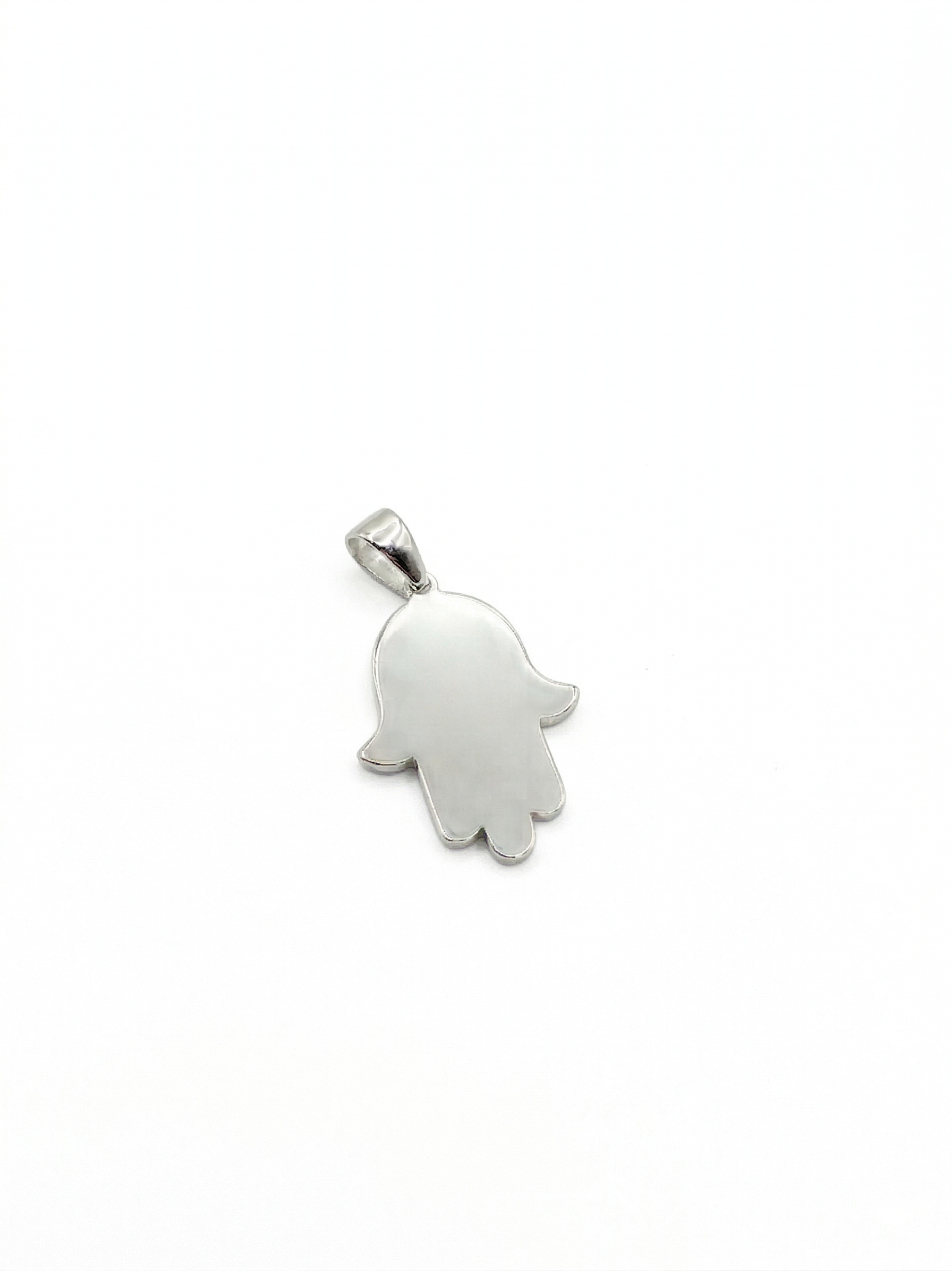
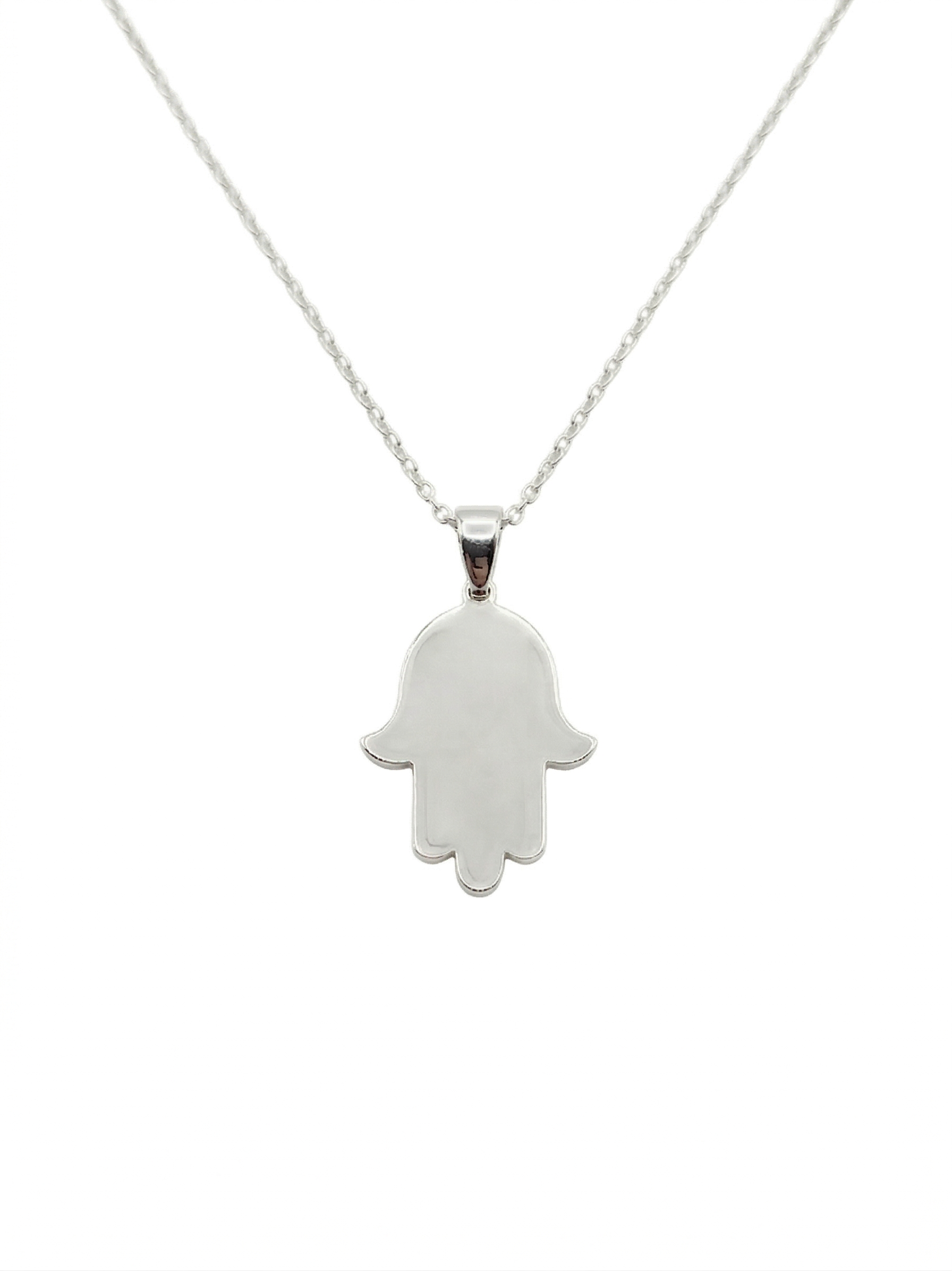

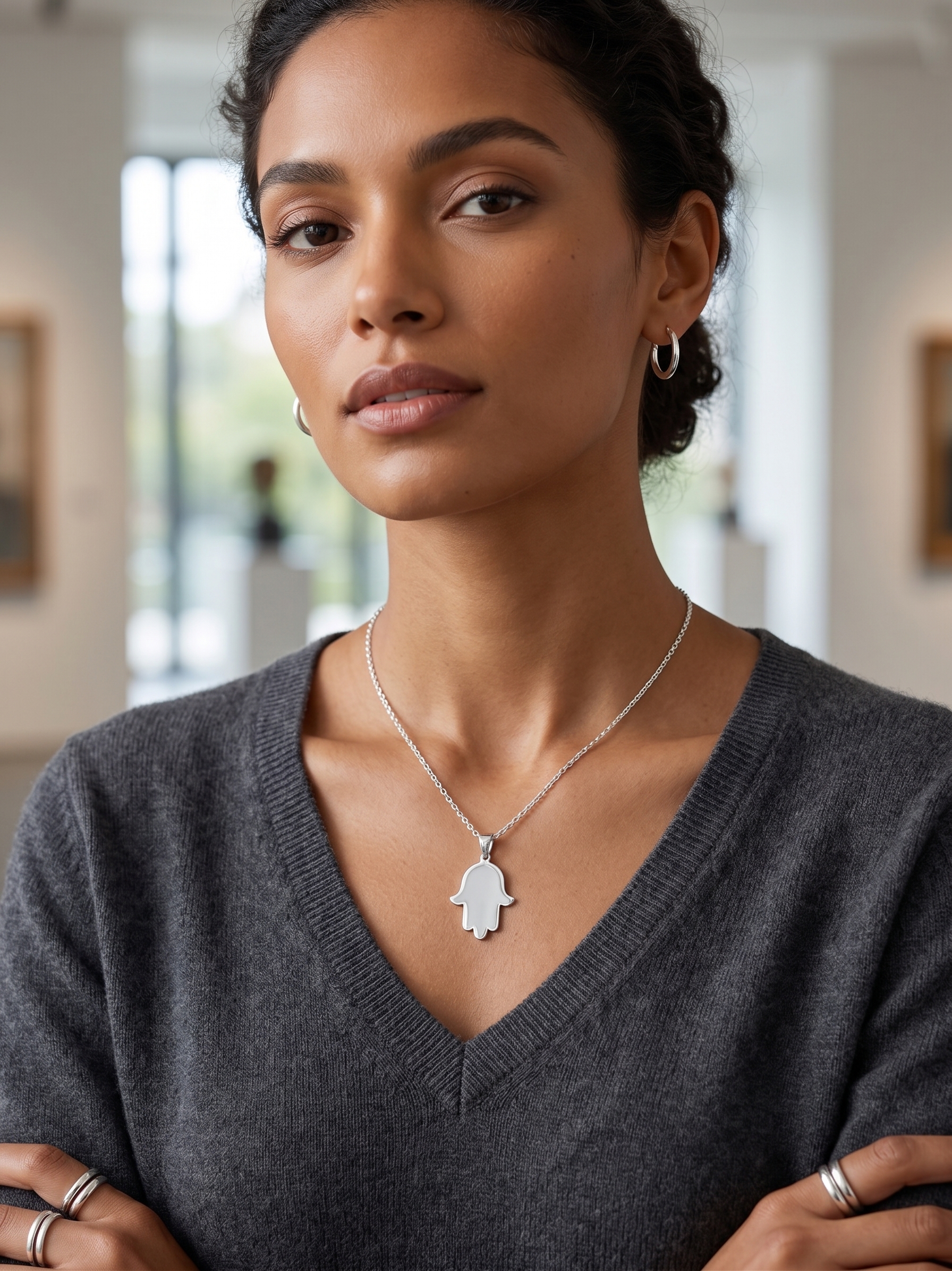
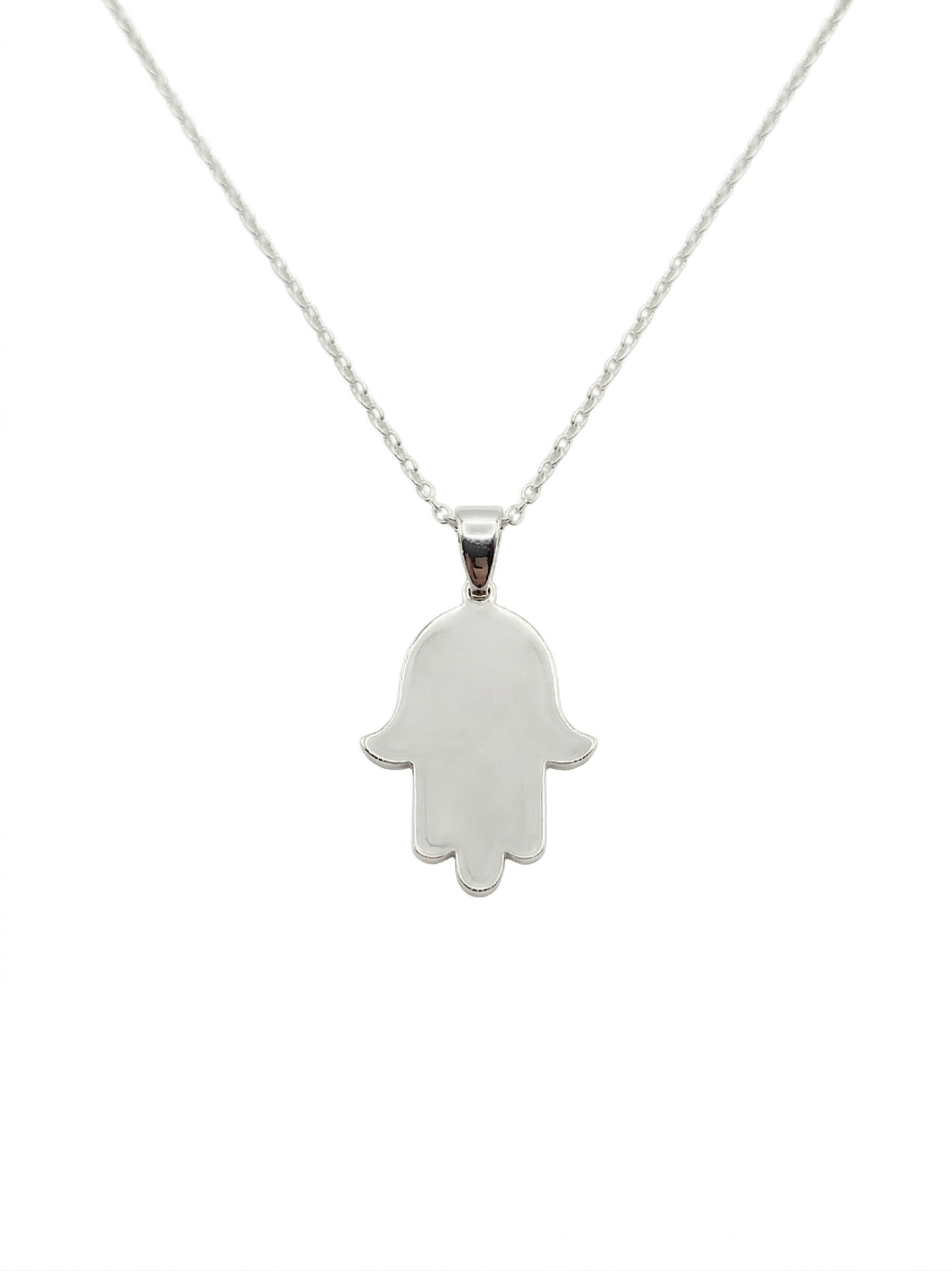
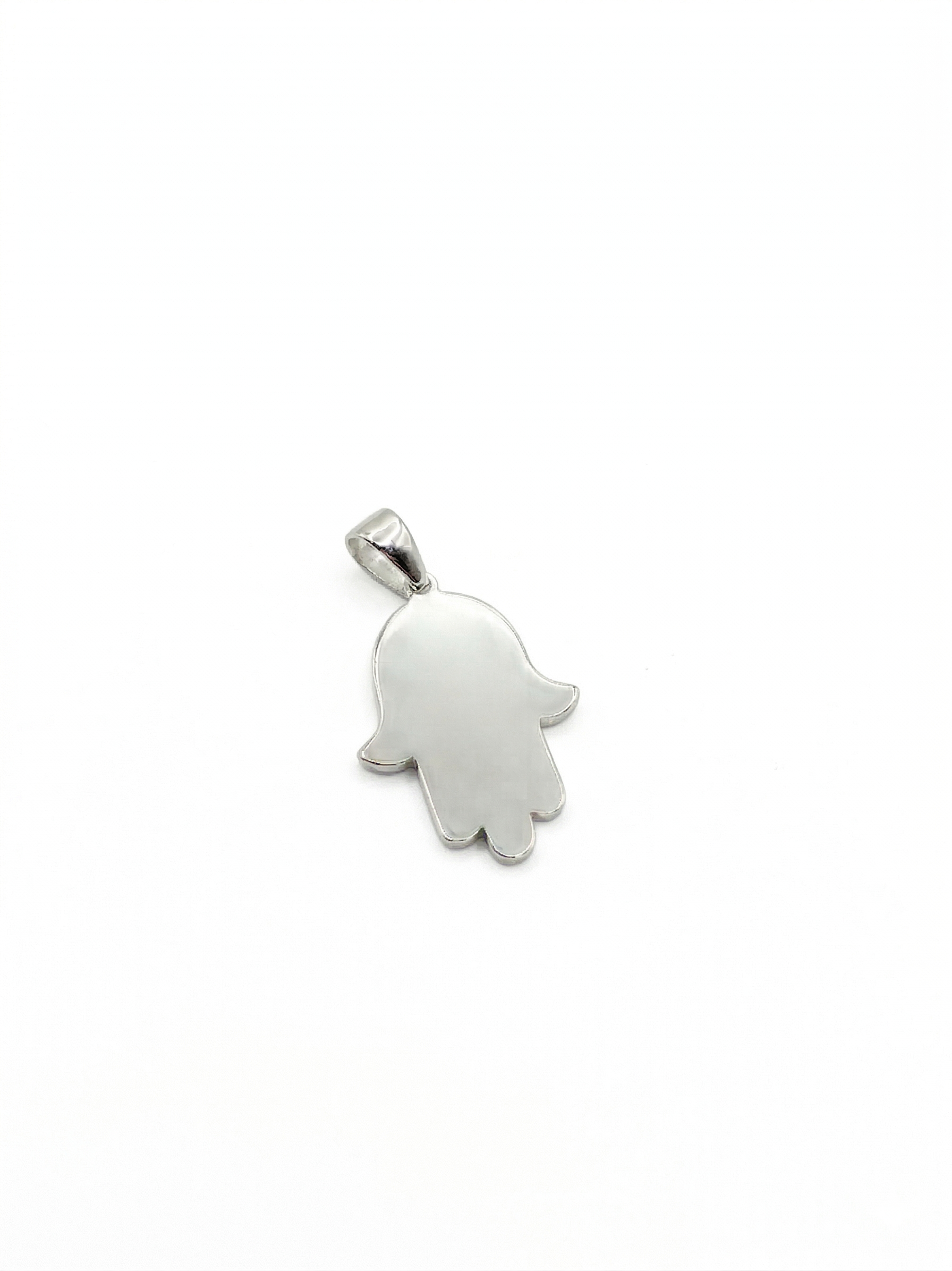
Silver Jewish Hamsa Hand
https://bethlehemjdc.com/product/jewish-hand/
The Origins and the Hand of Miriam The Hamsa—a symmetrical palm with five fingers—predates modern religions. Specifically, it first appeared in ancient Carthage and Mesopotamia. Over time, however, Jewish tradition deeply entwined the symbol with the biblical figure of Miriam, the sister of Moses and Aaron.
According to Midrashic tradition, Miriam served as the ultimate protector of her family. For instance, when she watched over the infant Moses in the Nile, her watchful gaze became a living “hand” of protection.
Furthermore, legend says a miraculous well followed the Israelites through the desert solely because of Miriam’s merit. When she passed away, as a result, the well dried up. Consequently, the Hamsa became known as the “Hand of Miriam.” Thus, it symbolizes life-giving water and the protective strength of a remarkable woman.
The Symbolism of Five The number five holds immense weight in Jewish tradition. Because the word Hamsa means “five” in Arabic, Hebrew numerology easily absorbed the symbol.
-
The Five Books: First, it represents the five books of the Torah (Chumash), which form the foundation of Jewish law.
-
The Senses: In addition, it reminds people to use all five senses to praise the Creator and perform Mitzvot (good deeds).
-
The Letter He: Finally, the fifth letter of the Hebrew alphabet, ה (He), represents one of the names of God. Therefore, artists often engrave this letter in the center of the palm to mark the Divine presence.
The Shield Against the Evil Eye For centuries, the Hamsa served a practical folk purpose in North Africa and the Middle East. In particular, Sephardic and Mizrahi Jewish communities relied on the symbol to ward off the Ayin Hara, or the “Evil Eye.”
People believed that envious glares and negative energy could bring sudden misfortune. To combat this, families used the Hand of Miriam as a “stop” sign to deflect negativity.
For example, people did not just wear it as jewelry. Instead, artists painted it on doorways, embroidered it into baby clothes, and etched it onto silver amulets.
Inside the palm, you will often find an eye. Although some people mistake this for the “Evil Eye” itself, it actually represents the Watchful Eye of God, thereby assuring wearers that they are never truly alone.
The Kabbalistic Influence When Jewish mysticism (Kabbalah) grew in popularity, the Hamsa acquired deeper spiritual meanings. As a result, mystics began to view the hand as a spiritual map of the soul.
For example, scholars linked the five fingers to the Sefirot (divine attributes). Consequently, the hand became a dynamic tool for meditation. By focusing on the shape of the Hamsa, a person could align their everyday actions with the will of the Heavens. Ultimately, the symbol evolved from a simple protective charm into a sophisticated spiritual anchor.
The Modern Renaissance In the early 20th century, Jewish populations migrated and established the State of Israel. During this time, the Hamsa underwent a major cultural shift. While Ashkenazi Jews once dismissed it as a superstitious custom, communities later embraced it as a bridge across the global Jewish diaspora.
Today, therefore, the Hamsa stands as a universal symbol of Israeli art and Jewish identity. Moreover, it offers a rich canvas for everyday creativity:
-
Silver Filigree: Craftspeople use this style in order to honor traditional Yemenite metalworking.
-
Traveler’s Prayer: Artisans engrave the metal with the Tefilat HaDerech so that it protects travelers on journeys.
-
Home Blessings: Wood and ceramic artists write Birkat HaBayit (Blessing for the Home) on wall hangings specifically to attract peace.
A Shared Heritage Most importantly, the Hamsa serves as a powerful bridge between different cultures. Indeed, both Jews (who honor the Hand of Miriam) and Muslims (who cherish the Hand of Fatima) treasure this sign.
Because of this shared connection, the symbol now represents a modern icon for Middle Eastern peace. In fact, in many artistic circles, people view the hand as a gesture of hope. It extends not in conflict, but in a mutual desire for safety and blessing.
A Lasting Legacy In summary, the story of the Jewish Hand is a story of endurance. First, it began as an ancient protective sign. Then, it transformed into a tribute to a biblical heroine, and ultimately it survived centuries of migration.
Whether it hangs in a car, rests on a necklace, or decorates a new home, the Hamsa offers a constant reminder of divine protection. Thus, it shows that our own hands have the potential to bring blessing into the world. In short, it says “stop” to evil and “welcome” to peace.


Reviews
There are no reviews yet.